Facilitator kit
Printable category cards · Original presentation sequence ·
Workshop flow; Breaking the Shell
The wording below is from the original facilitator outline.
The exercise is called 'breaking the shell’ , the minimum for it is about an hour (timings given below), although it works much better if given up to two hours. I've used it quite a lot and it really seems to work well.
Set up the vision · 5 mins
The set-up is to focus everyone on a vision - something clear and simple, quickly covered.
Surface the barriers · 15 mins
Then the question is 'what barriers stand in the way of achieving this'? The idea then is to get as many barriers out as possible, one per post-it note. I usually get everyone to spend a couple of minutes producing as many as possible, then read them out and put them all on a flip-chart; hearing everyone else's tends to get people producing many more.
Pause · 10 mins
At this stage it's a good idea to have a coffee break so people are just focusing on all the problems and issues - a deliberate down-point.
Introduce the categories · 5 mins
The next step is to introduce the categorisation approach. Barriers are categorised into four groups:
Brick walls - insurmountable obstacles we just have to live with!
Paper walls - look like real walls until tested, but are easily overcome, even by individuals
Partition walls - hard for individuals, but management or a project effort can overcome
Mindset issues - like collective paper walls, common assumptions that are not easily overcome
Sort and group · 10 mins
Then everyone has to place their post-its on a different chart according to which type of barrier they are, and in the process group similar barriers together
Discuss and choose action · 15 mins
Finally, there is a group discussion to agree the categorisation and consider the issues.
The whole purpose of the exercise is to get all the concerns and obstacles out on the table, then change the way people are thinking about the obstacles. The categorisation changes our psychological approach - brick walls just aren't worth worrying about anyway, paper walls we should just get over, and the others can actually be worked on.
This naturally leads on to an action planning session - every individual commits to overcome their 'paper walls', and key actions to address the partition walls and mindset issues are discussed and agreed. The whole set could potentially be done in an hour and a half, if squeezed.
The four categories
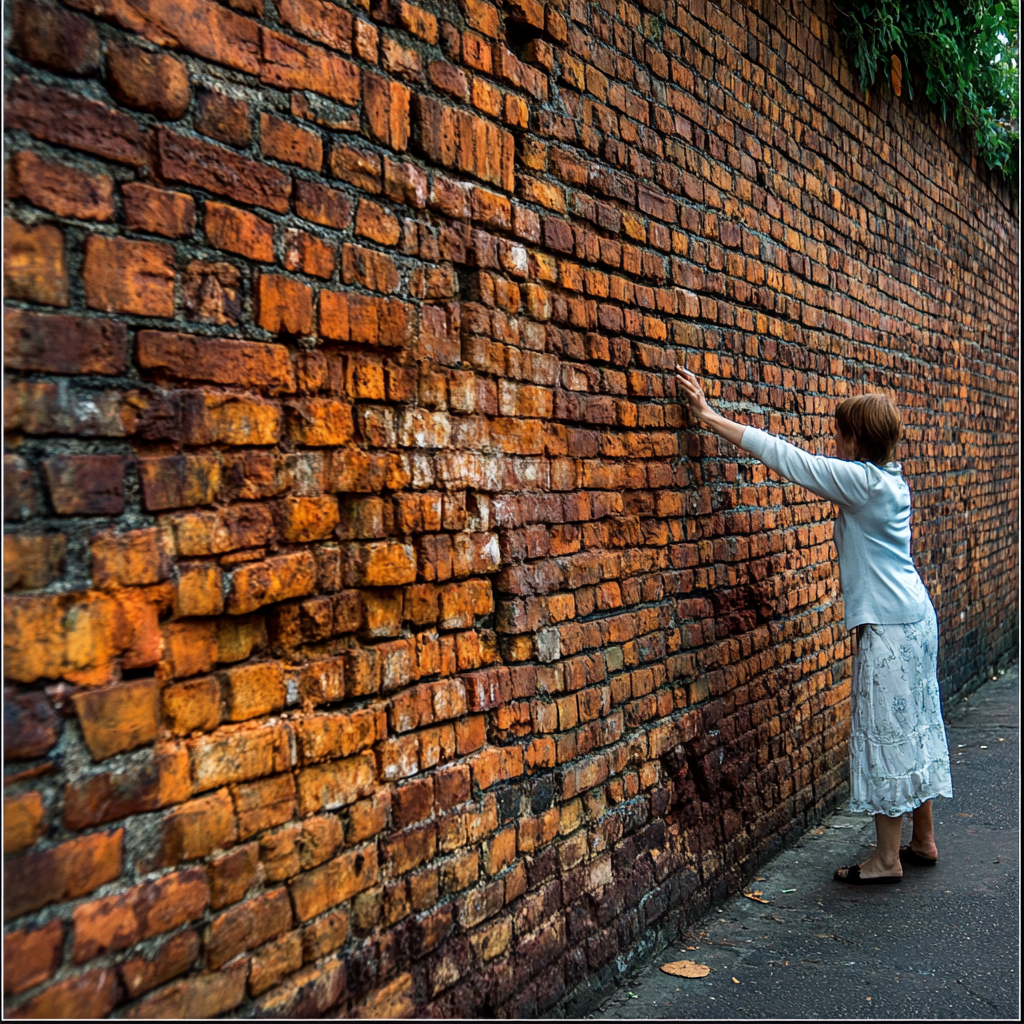
Brick walls
A really unalterable challenge. Things in the real world facing us that inhibit performance and are not likely to change.
This could be government or legal requirements, regulatory requirements, demographic changes, money market or international issues, high-level political developments.
These factors affect performance in delivering our service, but are well beyond individual or collective control.
Brick walls are immovable and real.
They are part of the bigger system.
Perhaps we should be campaigning to change them,
but that’s all we can do!
‘Can’t be changed’

Paper walls
This looks like a real barrier; until you test it. Then, you realise you can simply push through it.
Paper walls might exist because you think someone else will not approve, that it won't be supported by another part of the organisation, that it is 'policy' or the way things have always been done, etc.
But when you test this belief, you discover it isn’t true; others have done things differently and are doing things differently.
These challenges are manageable, but also real. This is something you can change about yourself, for yourself.
‘I can change’

‘Partition’ walls
These challenges can be managed through with effort, time, money and/or additional personnel, or other resources.
An individual might make some progress in dealing with this sort of challenge. Management might overcome the challenge totally; corporate management certainly should be able to.
Partitions might move slightly if pushed from the bottom, but if pushed from a higher level will often topple. We need help with these. This is something in the system that needs changing.
Examples include legacy, political, and structural issues.
‘We can change’

‘Mindset’ challenges
This type of challenge is based on untested beliefs and perceptions; like collective papers walls.
When you believe you can't, you are correct. These are the ones that block the below average from improvement.
Like paper walls, but this is something we need to change together.
Examples of this sort might include not feeling that you can pool resources across departmental or organisational boundaries, or seeing citizen and political complaints as a problem rather than positively.
‘Innovate to change’
Source and attribution
Slides: ‘2025-06-16 RedQuadrant - breaking the shell’. Facilitator outline: ‘Breaking the Shell outline (2)’. PDF: ‘Breaking the shell - overview’.
Creative Commons license 2010-2025 RedQuadrant; attribution required. Developed from an activity at www.squarewheels.com. The original files retain their wording, images, and attribution.